
Mini relax games-No wifi
JMGameCasual
4.494.00 Reviews
- Version
- 1.3.5
- Installs
- 10.00M
- Age Rating
- Everyone
Screenshots
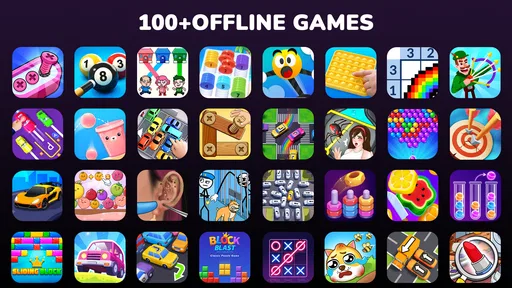

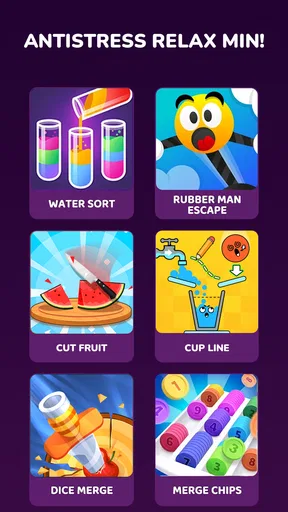
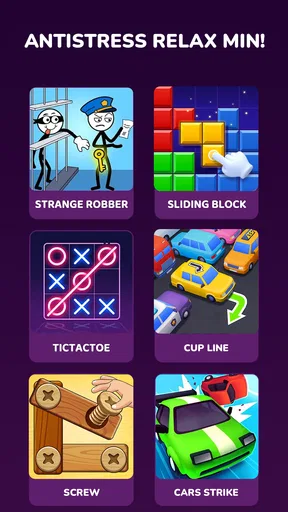
Our Review of Mini relax games-No wifi
 Analysis by Appyee
I spent time with Mini relax games-No wifi as a small casual game for short breaks, and its appeal is easy to understand: it aims to turn a few spare minutes into a collection of simple, low-pressure activities. The game is made by JMGame, costs nothing to start, and is suitable for Everyone. That combination makes it more approachable than a large, demanding mobile game, especially when I want something I can open without committing to a long session.
My overall impression is that this is best viewed as a lightweight mini-game playground rather than a deep progression game. It fits the moment when I am waiting for an appointment, taking a short break from work, or looking for something gentler than a competitive online match. The important question is not whether it replaces a major game on a phone, but whether its compact format gives you an easy way to relax without needing Wi-Fi.
How the game feels during quick sessions
The first thing I noticed is how naturally the no-Wi-Fi idea fits the casual format. I do not need to plan a long play session around it. Instead, I can treat it like a pocket selection of distractions: open it, play for a little while, and put it away. That makes it particularly useful for people who dislike games that punish them for leaving suddenly or require a large time investment before anything becomes enjoyable.
The store presents it as a collection of mini relax games, and that description sets a useful expectation. I would not install this looking for a single elaborate adventure, a complex story, or a competitive community. Its value comes from variety and convenience. If I am tired and only want a simple mental reset, a group of smaller activities can feel more welcoming than one large game with tutorials, menus, and long-term goals.
That simplicity also affects how quickly the experience feels ready. A casual title with small individual activities generally has a shorter path between opening the app and doing something, and that is the main speed advantage I associate with this kind of design. I would still avoid promising identical results on every phone, because startup behavior depends on the device and its available resources. On a reasonably maintained phone, however, the concept is clearly aimed at immediate, low-effort play rather than extended preparation.
There is a useful difference between “fast to start” and “fast to master.” The first is important here; the second may be less important. Mini-games can be understood quickly, but that does not automatically mean every activity will hold your attention for a long time. For me, the best use is to rotate between brief sessions instead of expecting one mode to provide hours of depth.
Where it fits into an ordinary day
A realistic example is a commute with unreliable connectivity. I might open the game before boarding, play during a short wait, and close it when I reach my stop. Because the experience is designed around offline access, it suits that awkward space between activities better than a game that depends on a live connection. It also works during a lunch break when I want to clear my head without getting pulled into a social feed.
Another good scenario is a quiet evening when I want stimulation but not pressure. Competitive games can leave me frustrated, while puzzle-heavy titles can demand more concentration than I have available. A mini-game collection sits between those extremes. It can give my attention somewhere to go without asking me to build a character, manage a large inventory, or remember a complicated control scheme.
Parents and younger players may also appreciate the Everyone age classification, although I would still make the final choice based on the individual child and the way the device is used. The absence of a high age threshold makes the game broadly accessible, but “casual” does not automatically mean every player will enjoy it. Some people want clear educational value or a carefully structured challenge, and this is not the first choice I would make for those needs.
What happens when I use it repeatedly
Short sessions are where this game makes the strongest case for itself. During heavier use, the main pressure is not necessarily the length of one sitting but the number of times I return to it. Reopening a game repeatedly throughout the day can expose small annoyances that are easy to miss in a single test: repeated loading, interruptions, or a feeling that the activities become familiar too quickly.
I would approach it as a rotating break tool rather than a primary daily game. That distinction matters. If I play only when I have a few spare minutes, the compact format remains useful. If I expect a large amount of new content every evening, the experience may feel limited compared with a full puzzle game, an endless runner with deeper progression, or a live multiplayer title.
Resource use is another sensible consideration. A mini-game collection sounds less demanding than a modern 3D game, but the actual burden can still vary with the phone, the operating system, and what else is running. I would not assume that every device will behave identically just because the game is casual. Closing unused apps before a long session is a practical step, especially on an older phone where memory pressure can affect switching and recovery.
For battery-conscious players, the offline nature is helpful in one specific way: it avoids the need to maintain a network connection while playing. That does not prove that the game uses very little power, and I would not treat “no Wi-Fi” as a battery guarantee. It simply makes the game more convenient in places where connectivity is poor and removes one source of interruption from the session.
Stability, interruptions, and recovering a session
Reliability matters more in a pick-up-and-play game than many people expect. If I open something for a two-minute break, I want the process to be straightforward. The game’s current version is 1.2.8, so anyone installing it should keep the app updated through the normal store process when updates are available. Staying current is especially sensible for a casual title used frequently, because small compatibility improvements can matter more than a dramatic new feature.
I also think about recovery. A game like this is likely to be interrupted often by calls, messages, navigation, or simply locking the screen. That is part of the normal use case, not an unusual edge case. I would therefore judge it by how easily I can return after an interruption, while remembering that the exact behavior can depend on the phone’s memory management. If the operating system closes the app in the background, any unsaved moment may not return exactly as I left it.
This is one reason I would avoid treating it like a serious competitive session. If a brief interruption ruins your progress or concentration, a more structured game with dependable checkpointing may suit you better. Here, the sensible habit is to play in small units and assume that a phone call or aggressive background cleanup could end the current moment. That is not necessarily a flaw unique to this game; it is a trade-off of using mobile software in short, interrupted bursts.
The large audience is encouraging in practical terms. The game has passed five million installs and holds an average rating of 4.2 from around seven thousand ratings. Those figures suggest that the basic concept has reached many players and that the overall experience is viewed positively by a substantial audience. They are not a promise that every device will be flawless, but they make the game easier to consider than an obscure title with no established user base.
There are also 78 written reviews, which can be more useful than a single score when deciding whether the game matches your habits. I would read recent comments with a specific question in mind: do players find the mini-games enjoyable over time, and do they mention problems on phones similar to mine? A rating helps with the broad picture, while individual experiences are better for spotting recurring friction.
Older phones and operating-system limits
The minimum requirement is Android 7.0, which gives the game a reasonably broad starting point among Android devices. That does not mean every phone running that system will deliver the same experience. A device can meet the operating-system requirement and still have limited storage, memory, or battery health. Before installing, I would check free space and close unnecessary background apps if the phone is older.
For a newer phone, I would expect the game’s casual positioning to make it less demanding than graphically ambitious releases, but I would still keep expectations realistic. “Mini” describes the style of play, not a guaranteed technical profile for every handset. If your phone already struggles with switching between apps, the most noticeable issue may be returning from a notification rather than playing the game itself.
People using iPhones should pay attention to the platform shown by the particular download page they are viewing. The confirmed system requirement here is Android 7.0, so I would not assume that the same requirement or identical behavior applies to an iOS edition. That is a small but important buying habit: check the device-specific listing instead of relying on a general description.
Storage management is also worth considering over time. Even a small casual game can occupy more space after updates or temporary files accumulate. If your phone is nearly full, installing any new game can create problems elsewhere, such as failed updates or slow app switching. I would leave comfortable free space rather than installing it at the absolute limit and then blaming the game for broader device pressure.
Free access and the cost of convenience
The game is free to download, which lowers the barrier to trying it. That is important for this genre because enjoyment depends heavily on personal tolerance for repetition and the particular mix of mini-games. I can test whether the short-session format fits my routine without paying upfront.
There are in-app purchases priced at $3.99 per item. That changes the decision for players who want a completely unrestricted free experience. I would treat the free version as the trial and avoid buying anything until I know which parts of the game I actually use. A purchase can be reasonable if it removes an annoyance or supports the way you play, but it is not automatically good value simply because the individual price looks modest.
For families, this is where device-level purchase controls become useful. The Everyone rating makes the game broadly approachable, but a child-friendly age label does not remove the need to manage spending. I would set approval requirements before handing the phone over, particularly if several people share the same account. That small preparation prevents the free entry point from becoming an unexpected source of charges.
Compared with a paid casual game, this model gives me more freedom to try it but may introduce more decisions during play. Compared with an ad-supported alternative, the balance depends on what interrupts your concentration and what the available purchases change. I prefer to judge the cost by actual use: if I play only occasionally, paying for optional items may not make sense; if I return often and the purchase improves the experience, it becomes easier to justify.
Who will enjoy it, and who should choose something else
I would recommend this game to someone who wants an accessible collection of short activities, especially when internet access is uncertain. It is also a good match for players who prefer low-pressure entertainment, dislike long tutorials, or want something that can be closed without feeling that an entire evening has been wasted.
I would be more cautious about recommending it to a player who needs a single deep game with a strong story, elaborate strategy, or meaningful long-term progression. A mini-game collection can offer variety, but variety is not the same as depth. If your ideal mobile game is one carefully designed puzzle that keeps unfolding for weeks, a dedicated puzzle title will probably give you more satisfaction.
It may also be the wrong choice if you want a social experience. The appeal here is personal, offline convenience rather than coordination with friends or competition against live opponents. Someone who measures enjoyment through leaderboards, team play, or constant new online events should look toward a different part of the casual-game category.
My most useful tip is to match the game to the length of your break. Use it for short gaps, travel without dependable connectivity, and moments when you want a mental reset. Do not force it into a two-hour nightly routine if the activities begin to feel repetitive. That simple adjustment makes the game feel more purposeful and helps reveal whether its variety is enough for your habits.
My performance verdict
After looking at speed expectations, repeated use, recovery, and device limits, I see Mini relax games-No wifi as a practical casual option rather than a technical showcase. Its strongest performance quality is convenience: it is built around brief access, offline play, and a broad audience. The Android 7.0 minimum keeps it available to many older devices, while the modest style should appeal to people who do not want a visually heavy game.
My reservation is that convenience cannot guarantee lasting depth or identical stability on every handset. Older phones with limited memory may be less comfortable when switching away and back, and players who demand substantial progression may outgrow the format. The optional $3.99 purchases also mean that “free” should be understood as a low-risk starting point, not necessarily a promise that every useful element will remain outside the purchase model.
Still, the game earns a place on my shortlist for offline breaks. A 4.2 average from around seven thousand ratings and more than five million installs indicate that the concept has found a sizeable audience, while JMGame keeps the offer straightforward: open a casual collection, play when convenient, and leave when the break is over. If you want a simple pocket distraction instead of a demanding main game, this is a sensible download to try first.
Privacy and Permissions
See what permissions an app requests and how it handles your data.
- Wi-Fi connection information
- view Wi-Fi connections
- Other
- view network connections, full network access, run at startup, control vibration, prevent device from sleeping, Google Play license check
Verdict
Strengths of Mini relax games-No wifi
- Works offline, making it useful during travel or without mobile data.
- Quick mini-games are convenient for short breaks and casual play.
- Simple controls make the game accessible to most users.
- Small game sessions require little time or long-term commitment.
- Relaxing gameplay can help distract from stress or boredom.
Limitations of Mini relax games-No wifi
- Some mini-games may feel repetitive after extended play.
- Limited content could reduce replay value for frequent players.
- Ads may interrupt gameplay, depending on the device and version.
- Offline play may limit updates, new levels, or online features.
- Basic graphics and sound may not appeal to users seeking polished gameplay.
Other Releases by JMGame
View All
Magic Piano: Rhythm Challenge
Music4.3
Similar Picks in This Category
View All
My Talking Angela
Outfit7 Limited4.2

My Talking Tom
Outfit7 Limited4.3

Pou
Zakeh4.2

My Talking Tom 2: Pet Game
Outfit7 Limited4.3

Candy Crush Saga
King4.6

Bridge Race
Supersonic Studios LTD4.1
Frequently Asked Questions
What is Mini Relax Games – No WiFi?
Mini Relax Games – No WiFi is a collection of small, casual games designed for quick entertainment and stress relief. It brings several simple activities together in one app, making it suitable for short breaks, travel, or moments when you do not have an internet connection. The games generally focus on easy controls, relaxing gameplay, and short sessions rather than complex progression or competitive features.
Can Mini Relax Games – No WiFi be played without an internet connection?
Yes, the app is designed primarily for offline play, so most of its mini-games can be enjoyed without mobile data or Wi-Fi after installation. This makes it convenient for flights, commuting, waiting rooms, and areas with poor reception. However, internet access may still be required for downloading the app, receiving updates, displaying certain advertisements, or using any optional online features included in a particular version.
Is Mini Relax Games – No WiFi suitable for children?
The simple controls and casual nature of the mini-games can make Mini Relax Games – No WiFi accessible to many children, but parents should still check the app’s age rating and content details before installation. Advertising, in-app purchase options, or external links may be present depending on the platform and version. Younger players should use the app with appropriate parental supervision and device purchase restrictions enabled.
Does Mini Relax Games – No WiFi contain advertisements or in-app purchases?
The availability of advertisements and optional purchases can vary according to the device, region, and app version. Free casual game collections commonly use ads to support development, and some may offer purchases to remove advertising or unlock additional content. Before downloading, review the listing on Google Play or the App Store and check the permissions, payment information, and purchase settings to avoid unexpected charges.
What devices are compatible with Mini Relax Games – No WiFi?
Compatibility depends on the specific Android or iOS version supported by the developer, as well as available storage and device performance. Because the app contains lightweight mini-games, it should generally work well on many modern smartphones and tablets, although older devices may experience slower loading or limited support. Always check the official store page for the required operating-system version and the latest compatibility information before installing.
Play our best games!


